Jacqueline Strehler
Research & Innovation Project Manager

How can Horizon Europe Cluster 3 projects ensure that their research results do not remain confined to reports and publications, but instead inform policy, support practitioners and contribute to real-world security improvements? This question was at the heart of the 2026 Projects to Policy Seminar (PPS), co-organised by the Directorate-General for Migration and Home Affairs and the European Research Executive Agency in Brussels on 10 and 11 June 2026. As one of the activities of the Community for European Research and Innovation for Security, the PPS brought together over 160 participants from almost 40 newly launched civil security research projects, six European Commission Directorates-General and several European Union agencies, including Europol, CEPOL, eu-LISA, and more.
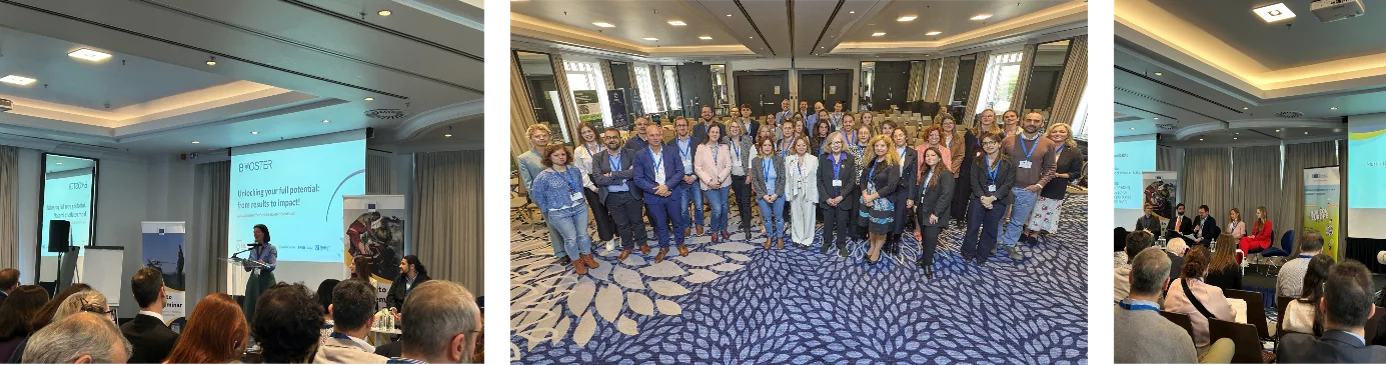
accelopment participated as a representative of CapCell to exchange with the wider security research community and prepare targeted support for CapCell partners in communication, dissemination, exploitation, innovation uptake and policy engagement. Based on the discussions, we have assembled practical recommendations on what newly funded security projects should already consider during the first half of implementation, even if these activities may seem more relevant towards the project’s end.
To help navigate the organisations and abbreviations used throughout this blog, we have included a short reference table with key security ecosystem actors and links below.
| Actor | Full term | Actor | Full term |
| CERIS | Community for European Research and Innovation for Security | Europol Innovation Lab | Innovation Lab of the European Union Agency for Law Enforcement Cooperation |
| DG HOME | Directorate-General for Migration and Home Affairs | EUDA | European Union Drugs Agency |
| REA | European Research Executive Agency | eu-LISA | European Union Agency for the Operational Management of Large-Scale IT Systems in the Area of Freedom, Security and Justice |
| CEPOL | European Union Agency for Law Enforcement Training | EU Innovation Hub | EU Innovation Hub for Internal Security |
| JRC | Joint Research Centre |
Communication, dissemination and exploitation are integral parts of every Horizon Europe project and should be planned from the very start of implementation (read more in our blog on developing your Plan for Dissemination, Exploitation and Communication). Across the sessions dedicated to these topics, however, the seminar highlighted several aspects that are particularly important for Horizon Europe Cluster 3 projects.
Unlike many other research areas, Cluster 3 projects are expected not only to generate excellent research, but also to support policymakers, practitioners and other end users with knowledge, tools and solutions that can contribute to Europe’s security. Depending on the call topic, this means engaging law enforcement authorities (LEAs), first responders, policymakers and the wider security community throughout the project, while ensuring that results are translated into policy, operational practice or further innovation.
Against this background, we have summarised the seminar’s main recommendations in three areas that are particularly relevant for newly funded Cluster 3 projects: engaging with policymakers, planning exploitation and innovation uptake from the outset, and making the most of the wider European security research ecosystem.
One of the strongest messages from DG HOME, REA and the policy experts participating in the seminar was that policy engagement should begin long before a project produces its final results. Influencing policy is rarely the outcome of a single policy brief or dissemination activity. Instead, it is a continuous process of understanding policy needs, building relationships and providing relevant evidence when policymakers need it.
For policymakers, evidence is only valuable if it helps address a concrete policy challenge, supports legislative or strategic developments, or improves operational decision-making. The REA’s guidance emphasises that effective policy engagement starts with understanding the relevant Cluster 3 policy landscape, identifying the policy question, understanding who is involved in the decision-making process, and tailoring evidence to the needs of specific audiences rather than producing generic dissemination material.
Before engaging with policymakers, projects should ask themselves:
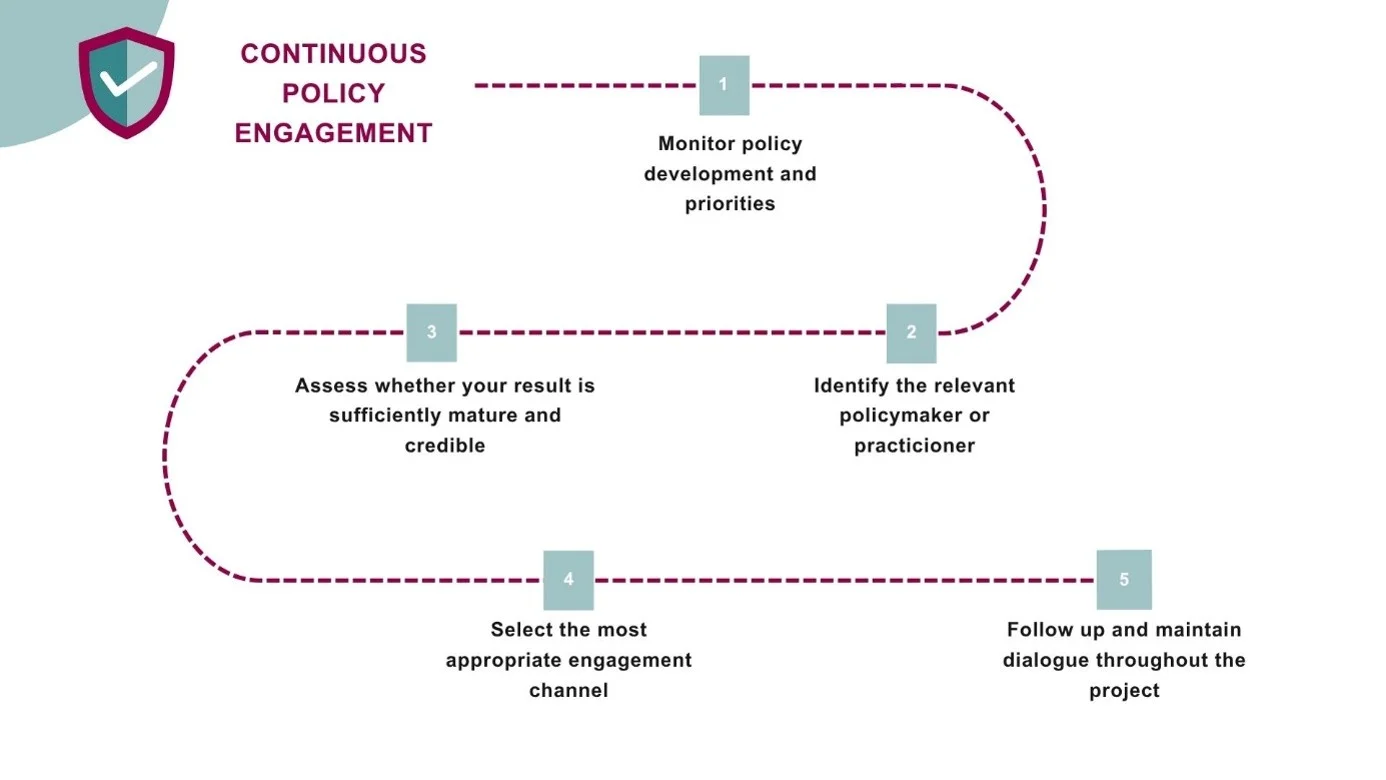
Projects looking to strengthen their policy engagement from step 1 to step 5 can make use of the following EU resources on sharing scientific evidence with policymakers:
In addition to the policy engagement channels highlighted in the REA guidance and during the seminar, such as policy briefs, workshops and targeted exchanges with European Commission services or EU agencies, periodic reporting offers an accessible route available to all projects. Although sections on policy contributions are optional, REA and DG HOME explained that this information is collected within the European Commission and can help identify project contributions to ongoing policy development. Projects should therefore document policy-relevant outputs throughout implementation and discuss significant contributions with their Project Officer.
Ultimately, policy impact is built through sustained engagement rather than isolated dissemination activities.
The seminar’s second major theme was exploitation and innovation uptake, with one clear message: exploitation planning should be embedded in project management from the very beginning, not postponed until final deliverables are approaching.
Many Horizon Europe Cluster 3 projects develop results with practical value for practitioners and policymakers, from software tools, methodologies and training materials to analytical frameworks, datasets, policy recommendations and prototypes. Turning these into practical use requires continuous planning throughout implementation. This is reinforced by the European Commission’s study on the factors influencing the uptake of EU-funded security research outcomes, which shows that uptake is a long-term process shaped by decisions made before and during implementation. Key success factors include early end-user involvement, regular validation with practitioners, timely identification of uptake barriers and clear ownership of project results.
The Consortium Agreement provides the legal foundation for collaboration, intellectual property and access rights. However, as exploitable results begin to emerge, projects often benefit from developing additional exploitation arrangements tailored to their specific needs. During the seminar, partners were encouraged to clarify issues such as:
These discussions should begin well before project results reach maturity. This is also reflected in REA’s starter kit on Dissemination and Exploitation, which recommends identifying key users, prioritising Key Exploitable Results (KERs), checking whether results are suitable for market or other uses, and managing intellectual assets from the start. Waiting until the final year often makes it considerably more difficult to resolve ownership questions, define exploitation responsibilities and establish realistic pathways towards operational uptake.
Projects seeking additional support can also benefit from the European Commission’s Horizon Results Booster, which provides free expert services on dissemination, exploitation, business planning and go-to-market strategies for eligible Horizon Europe projects. For further guidance, you may also find our blog Making the most of the EC support services for innovation and exploitation in Horizon Europe projects useful.
*DESCA: Development of a Simplified Consortium Agreement.
Although Horizon Europe Cluster 3 covers diverse thematic areas, including Fighting Crime and Terrorism, Border Management, Disaster-Resilient Society, Resilient Infrastructure, Cybersecurity and Strengthened Security Research and Innovation, projects often face similar challenges. These include engaging practitioners, demonstrating uptake, managing sensitive information, preparing exploitation strategies and ensuring that outcomes remain relevant beyond the lifetime of EU funding.
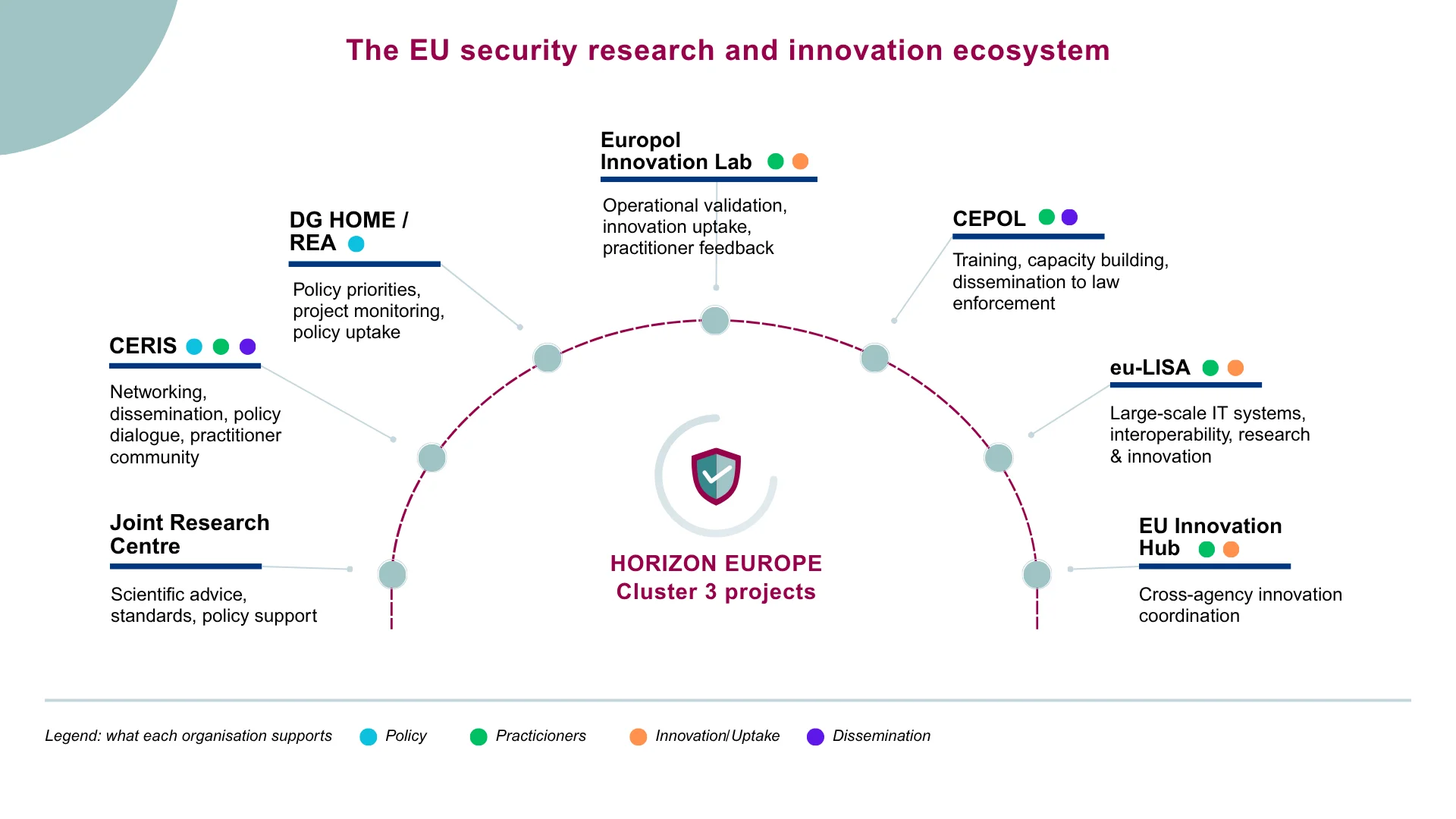
Participation in the wider security ecosystem can help projects validate results, identify opportunities for uptake and ensure that their research addresses real operational and policy needs. At the centre of this ecosystem lies CERIS, which brings together researchers, practitioners, policymakers, industry and civil society through thematic workshops, policy discussions and networking activities. For newly funded projects, CERIS provides an excellent starting point for building relationships with the wider European security community.
Below are three recurring events that can help projects establish these connections during the first half of implementation*
*This list is not final or exhaustive. Please check institutional websites for updated information. CERIS workshops and events are published throughout the year on the CERIS events page.
The overview below summarises key actors in the European security research ecosystem and highlights which types of support they can offer to Horizon Europe Cluster 3 projects, including policy, practitioner engagement, innovation and uptake, and dissemination.
At accelopment, we support projects throughout the Horizon Europe lifecycle, with a focus on project management, communication, dissemination, exploitation and impact. For Cluster 3 security projects, this includes helping consortia plan policy engagement, structure exploitation activities and connect project results with the right stakeholders, networks and EU support services.
Our team has extensive experience supporting EU-funded research and innovation projects. Through our involvement in projects such as CapCell, we work closely with researchers, forensic practitioners, police authorities and European forensic networks to help translate research results into policy relevance, practitioner engagement and operational use.
Are you looking for support with communication, dissemination, exploitation and impact in your Horizon Europe security project? Get in touch with our experts to discuss how we can support your consortium throughout project implementation and help maximise the policy and operational impact of your results.