
MSCA DN 2025 Call: Record participation and slight drop in expected success rates
28th November 2025 at 1:21 pm
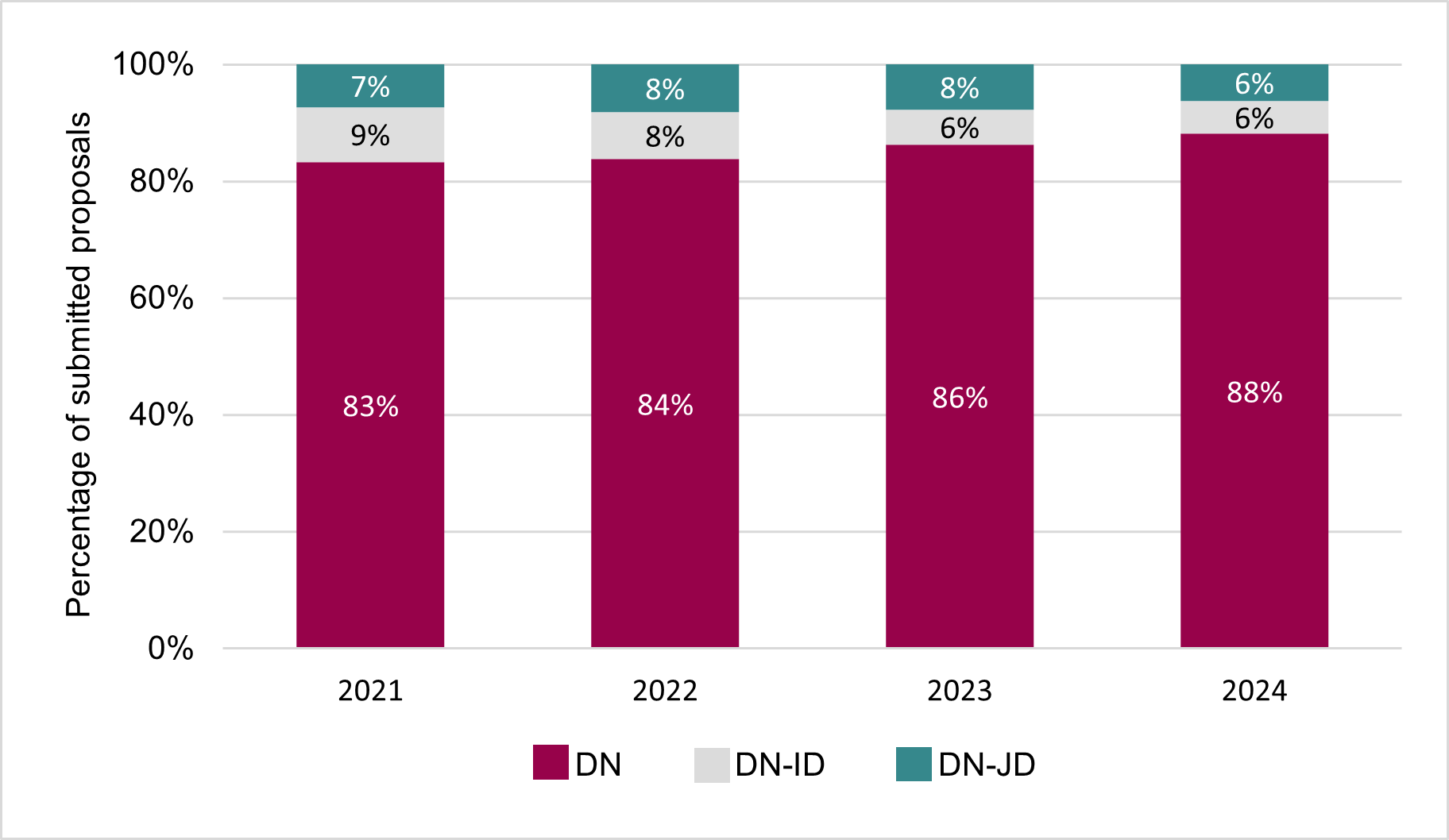
The submission deadline for the MSCA 2025 Doctoral Networks (DN) on 25 November 2025 has once again drawn strong interest. A total of 1,616 proposals, marking a 14% increase from last year, were submitted – an all-time high for the DNs and in line with the trend of high participation and increasing competition in the Horizon Europe programme. In this post, we take a closer look at the latest submission statistics, compare them with trends from the 2021-2025 period and assess what this may mean for applicants in terms of expected success rates.
The standard DNs remain the preferred option for consortia, accounting for 1,423 submissions. Their fewer structural and administrative constraints continue to appeal to applicants, compared to the more specialised Industrial Doctorates DN-IDs (82) and Joint Doctorates DN-JDs (111).
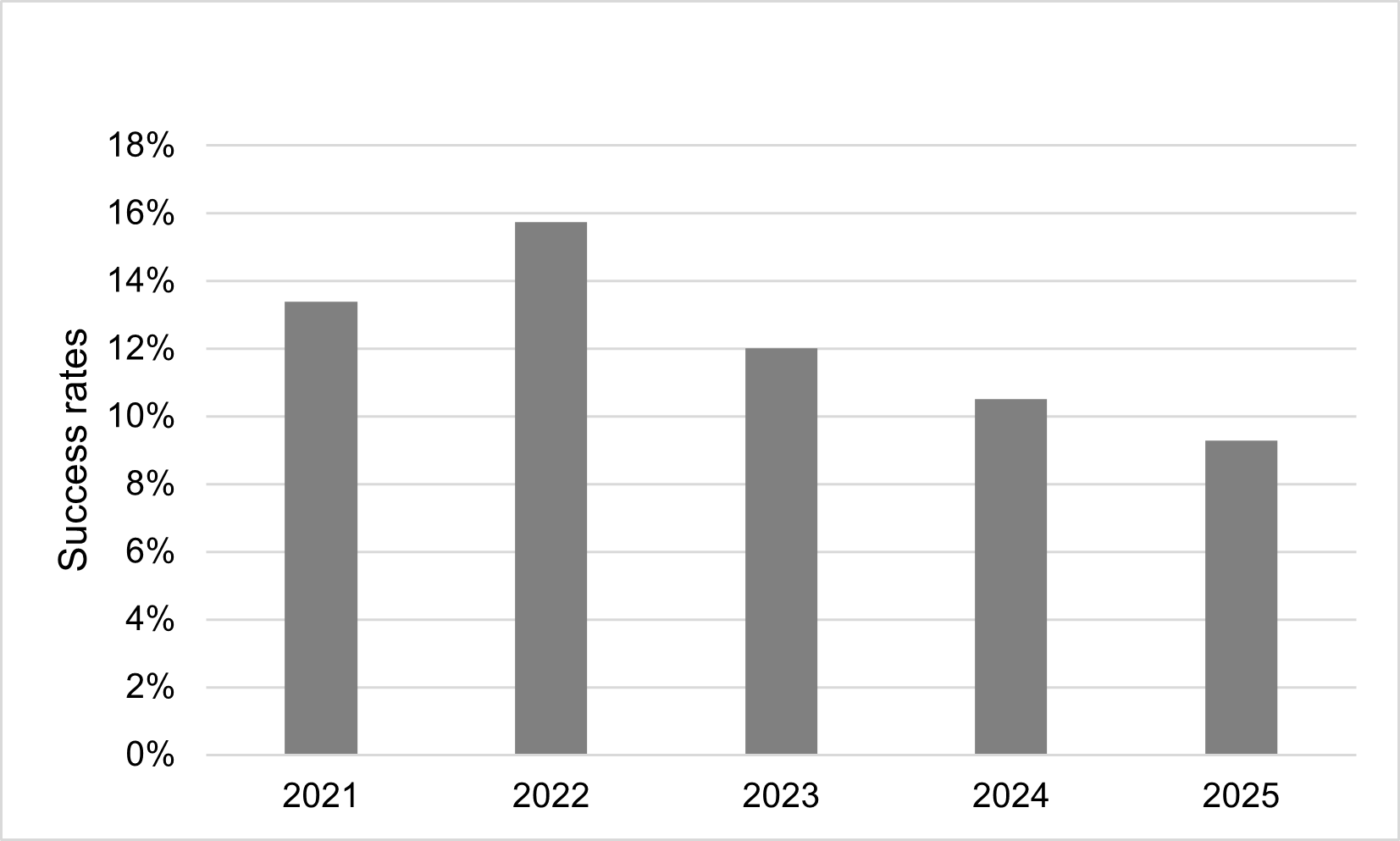
With an indicative budget of 597.8 million euro, the EU expects to fund around 150 projects. Considering the high subscription rate of the DN 2025, we expect the success rate across DN types to fall below 10% for the first time in Horizon Europe, to around 9.28%. Since 2022, the success rates have continued to decrease.
A look ahead
As stated on the EC’s official MSCA webpage, the evaluation results will be communicated in April 2026, and the first successful DNs are expected to start in September 2026.
The MSCA Work Programme 2026-2027 hasn’t yet been officially adopted; however, the latest draft is expected to be final, and the adoption notice is expected by mid-December at the latest. The EU expects to invest 593.03 million in the MSCA 2026 DN call, currently scheduled for 24 November 2026. Notably, a new DN sub-call will be introduced under the new Horizontal Activities, for Doctoral Networks for AI in Science.
Our DN track record and services from FP7 to Horizon Europe
We have long-standing experience from more than two dozen DNs/ITNs, including the newly starting DNs PANIONS, INT2ACT and BioTransform as well as the ongoing DNs BREAKthrough, CONcISE, DarChemDN, MITGEST, MobiliTraIN and SYNSENSO and the ID MIRELAI. Our primary role typically involves assisting with proposal writing and supporting the preparation of the Grant Agreement. During the implementation phase, we can join the consortium as an Associated Partner, providing support with communication and dissemination activities, project administration, and contributing to the training of Doctoral Candidates through transferable skills training sessions on science communication and grant writing, among others.
If you want to be notified as soon as we publish any MSCA-DN-related news, you can subscribe to our blog posts and stay updated about the latest developments, trends, and results.